Processing frames from camera
This example shows how to run a camera widget using QVideoFrame-based processing pipeline.
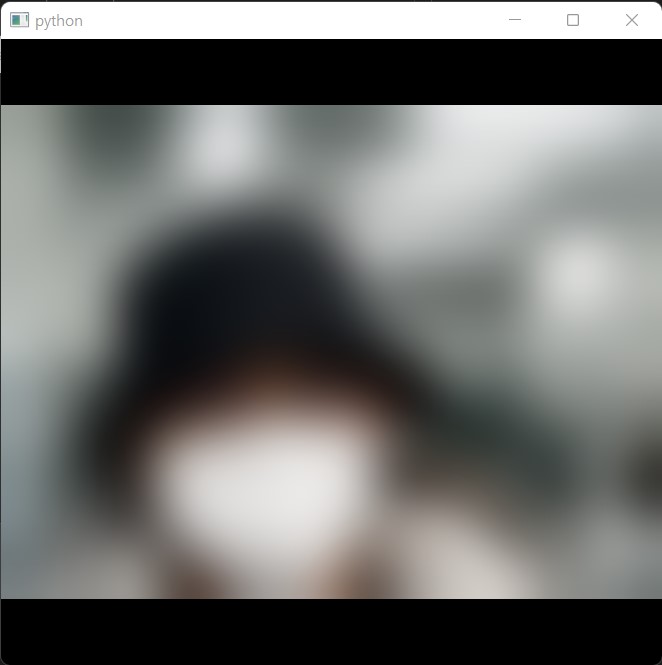
Frame-based camera widget with Gaussian blurring process
"""
Camera example with blurring pipeline on QVideoframe.

The processor receives video frame from the video sink of media capture session,
and emits processed video frame.

"""

import cv2  # type: ignore[import]
import numpy as np
from PySide6.QtCore import Slot
from PySide6.QtWidgets import QMainWindow
from PySide6.QtMultimedia import QCamera, QMediaCaptureSession, QVideoFrame, QVideoSink
from PySide6.QtMultimediaWidgets import QVideoWidget
from araviq6 import VideoFrameWorker, VideoFrameProcessor


class BlurWorker(VideoFrameWorker):
    def processArray(self, array: np.ndarray) -> np.ndarray:
        return cv2.GaussianBlur(array, (0, 0), 25)


class Window(QMainWindow):
    def __init__(self, parent=None):
        super().__init__(parent)
        self._camera = QCamera()
        self._captureSession = QMediaCaptureSession()
        self._cameraVideoSink = QVideoSink()
        self._frameProcessor = VideoFrameProcessor()
        self._blurWorker = BlurWorker()
        self._videoWidget = QVideoWidget()

        # set up the pipeline
        self._captureSession.setCamera(self._camera)
        self._captureSession.setVideoSink(self._cameraVideoSink)
        self._cameraVideoSink.videoFrameChanged.connect(
            self._frameProcessor.processVideoFrame
        )
        self._frameProcessor.videoFrameProcessed.connect(self.displayVideoFrame)

        self._frameProcessor.setWorker(self._blurWorker)
        self.setCentralWidget(self._videoWidget)

        self._camera.start()

    @Slot(QVideoFrame)
    def displayVideoFrame(self, frame: QVideoFrame):
        self._videoWidget.videoSink().setVideoFrame(frame)

    def closeEvent(self, event):
        self._frameProcessor.stop()
        super().closeEvent(event)


if __name__ == "__main__":
    from PySide6.QtWidgets import QApplication
    import sys

    app = QApplication(sys.argv)
    window = Window()
    window.show()
    app.exec()
    app.quit()
"""
Camera example with blurring pipeline on QVideoframe.

The processor receives video frame from the video sink of media capture session,
and emits processed video frame.

"""

import cv2  # type: ignore[import]
import numpy as np
from PyQt6.QtCore import pyqtSlot
from PyQt6.QtWidgets import QMainWindow
from PyQt6.QtMultimedia import QCamera, QMediaCaptureSession, QVideoFrame, QVideoSink
from PyQt6.QtMultimediaWidgets import QVideoWidget
from araviq6 import VideoFrameWorker, VideoFrameProcessor


class BlurWorker(VideoFrameWorker):
    def processArray(self, array: np.ndarray) -> np.ndarray:
        return cv2.GaussianBlur(array, (0, 0), 25)


class Window(QMainWindow):
    def __init__(self, parent=None):
        super().__init__(parent)
        self._camera = QCamera()
        self._captureSession = QMediaCaptureSession()
        self._cameraVideoSink = QVideoSink()
        self._frameProcessor = VideoFrameProcessor()
        self._blurWorker = BlurWorker()
        self._videoWidget = QVideoWidget()

        # set up the pipeline
        self._captureSession.setCamera(self._camera)
        self._captureSession.setVideoSink(self._cameraVideoSink)
        self._cameraVideoSink.videoFrameChanged.connect(
            self._frameProcessor.processVideoFrame
        )
        self._frameProcessor.videoFrameProcessed.connect(self.displayVideoFrame)

        self._frameProcessor.setWorker(self._blurWorker)
        self.setCentralWidget(self._videoWidget)

        self._camera.start()

    @pyqtSlot(QVideoFrame)
    def displayVideoFrame(self, frame: QVideoFrame):
        self._videoWidget.videoSink().setVideoFrame(frame)

    def closeEvent(self, event):
        self._frameProcessor.stop()
        super().closeEvent(event)


if __name__ == "__main__":
    from PyQt6.QtWidgets import QApplication
    import sys

    app = QApplication(sys.argv)
    window = Window()
    window.show()
    app.exec()
    app.quit()